Table of Content

Roulette Quick Win: What Really Happens In A Short Live Roulette Session

Last updated: March 2026 · Written for Australian players · 18+ only

Short answer first, because that is what most people came for. A quick win at roulette is possible, but it is variance, not strategy. This guide explains the mechanics, the maths, the live formats and the bonus conditions that decide whether a fast win ever reaches your bank account.

Roulette In 30 Seconds (Quick Summary)

  • The point of the game:predict which pocket the ball settles in. Numbers 1–36 plus a single zero (0), or 0 and 00 on the American wheel.
  • The single most valuable decision:choose European roulette (house edge 2.70%) or French roulette over American roulette (house edge 5.26%). Nothing else you do at the table will move the maths this much.
  • Payoutsrun from 1:1 (Red/Black, Even/Odd, High/Low) to 35:1 (straight-up on a single number).
  • The best rule set of all:La Partage or En Prison on French tables cuts the edge on even-money bets to 1.35%.
  • The honest answer on "quick wins":a short winning session is entirely possible because of variance, not because of a system. Over enough spins the house edge is mathematically unavoidable. No progression, whether Martingale, Fibonacci, D'Alembert or Paroli, changes the expected value of a single spin.
  • If you play in Australia:use licensed services, set deposit and session limits before you start, and keep Gambling Help Online, 1800 858 858 within reach.
Roulette In 30 Seconds Quick Summary

General information only. This guide explains how roulette works mathematically and commercially. It is not financial, legal or gambling advice. Gambling is restricted to adults in jurisdictions where it is lawful. If gambling is causing you or someone you know harm, contact the National Gambling Helpline on 1800 858 858 (available 24/7 across Australia).

What "Roulette Quick Win" Actually Means: Offer, Game Or Brand

Search that phrase and you get three different things mixed together. Worth untangling before you deposit anything.

As a game description, a roulette quick win means a short session that ends in profit. Ten spins, twenty spins, a lucky run on red. Real, but random.

As a brand or promotion, "Quick Win" or "QuickWin Casino" refers to an operator name or a promotional mechanic. A welcome bonus, a cashback, a faster payout rail. That is a commercial wrapper around the game, not a change to it.

As a bet type, players use it loosely for the fast outside bets: quick win red or black, quick win odd or even. These resolve in a single spin at even money, which is why they feel "quick".

The distinction matters because only the first two are marketed to you. The third is where the maths lives.

What Roulette Quick Win Actually Means

Roulette Quick Win: Offer, Game Or Casino Brand

If you have landed on a page promoting roulette quick win offers, check what is actually being offered. A bonus? Free spins that may not even apply to table games? A specific set of roulette games from a named studio? Operators bundle these differently, and the labels rarely match.

QuickWin Casino, like most brands using this style of naming, presents a catalogue of casino games with roulette sitting inside a live casino section. The roulette games available to you depend on the studio supply deal, your location and whether the operator restricts table play under bonus terms. None of that changes the pocket count on the wheel.

Roulette Quick Win Offer, Game Or

What To Check Before Claiming A Bonus And Starting Play

Before you accept any welcome bonus, work through this short list:

  • Minimum deposit required for eligibility, and whether the bonus applies to your first deposit only.
  • Whether roulette counts towards wagering at all. Often it does not.
  • Maximum bet while bonus funds are active, commonly $5 to $10 per spin.
  • Withdrawal caps on winnings derived from bonus money.
  • Expiry window, usually 7 to 30 days.

Fact check: bonus amounts, deposit thresholds, eligible games and withdrawal rules change without notice. Verify every figure on the operator's own promotions and terms pages, not in a review, including ours. Screenshot the terms as they stood when you deposited.

Reality Check: Is A "Roulette Quick Win" A Real Thing?

Yes and no, and the distinction matters more than any betting system you will ever read about.

Yes, short sessions can end in profit. Roulette is a high-variance game with independent trials. Over ten or twenty spins, the spread of possible outcomes is wide enough that a player betting on red can walk away up several hundred dollars. That is not skill. That is dispersion around a negative mean.

No, there is no mechanism, mathematical, behavioural or technological, that converts a negative-expectation game into a positive one through bet sizing. Each spin is an independent event with a fixed payout structure. A staking plan reshuffles when you risk money, not how much the game returns.

Reality Check Is A Roulette Quick

«Statistical analysis of roulette betting systems shows the expected value per coup remains equal to the house edge — neither Martingale nor Paroli alters this fundamental fact.» — UNLV Center for Gaming Research, Roulette Betting Systems Analysis. https://gaming.unlv.edu/reports/roulette_betting_systems.pdf

The practical implication for anyone chasing a quick win: your realistic levers are wheel selection, rule selection (La Partage/En Prison), bet type (which determines variance, not edge), session length, and stop-loss and stop-win discipline. Everything else is marketing.

A promo can alter what you receive on top of a result. It cannot alter the result's likelihood. Always read the bonus terms before you assume a roulette-friendly offer exists.

How Roulette Works: Wheel, Table, Ball And The Round

The Two Halves Of A Roulette Table

A roulette table has two functionally separate parts:

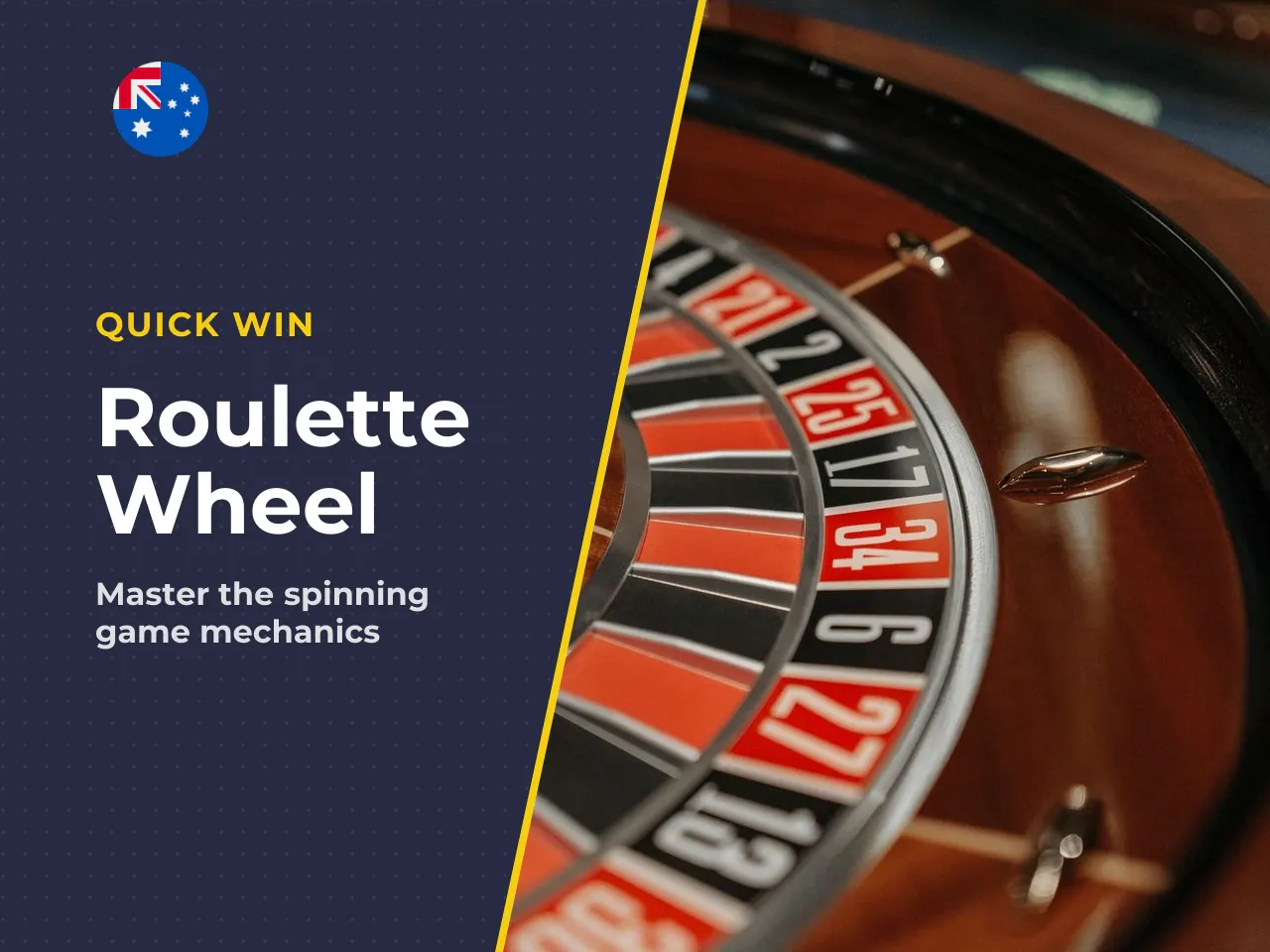
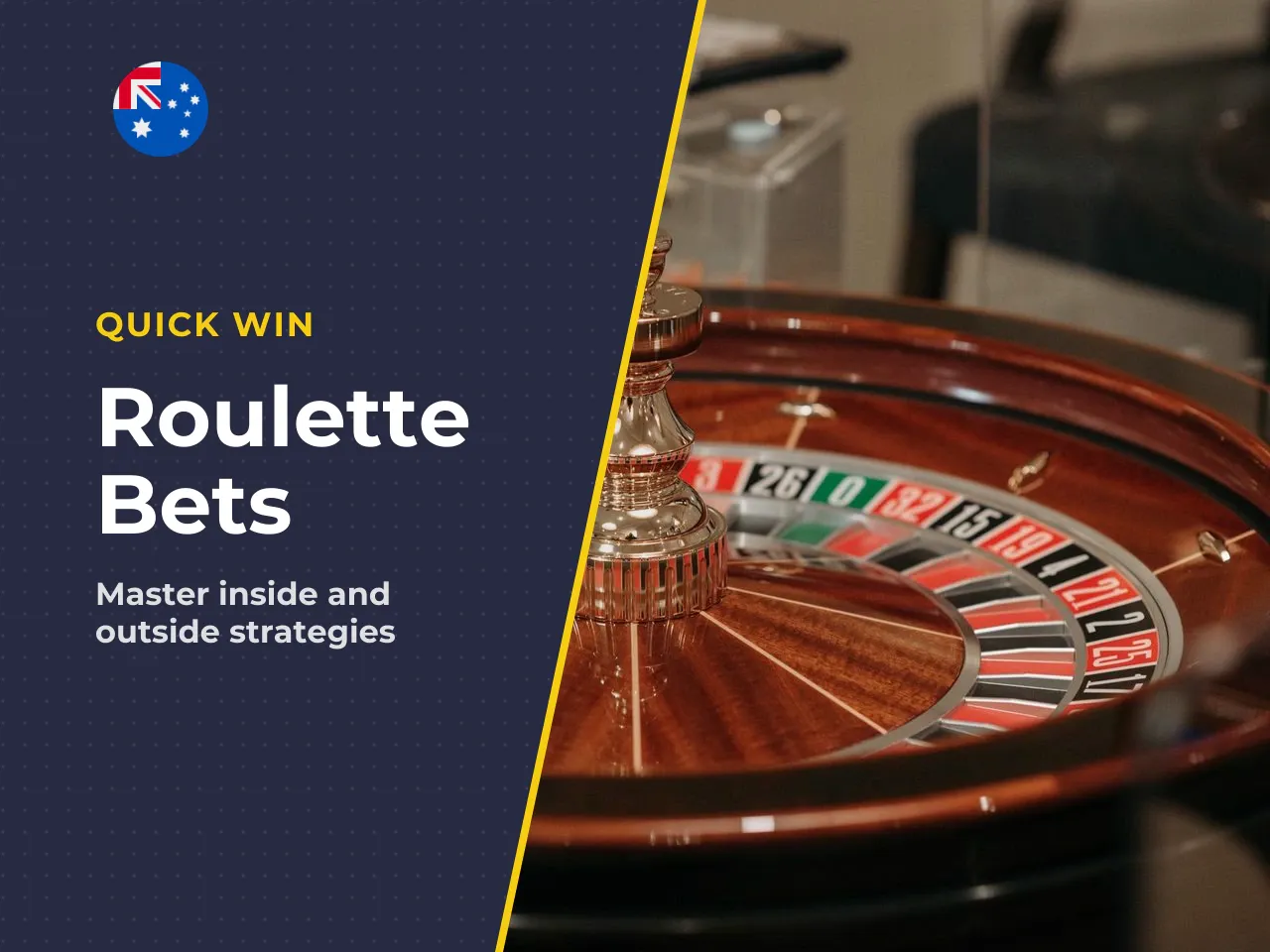
  1. The wheel. A rotating disc with numbered pockets, 1 to 36 in alternating red and black, plus one green zero (European/French) or two green zeros, 0 and 00 (American).
  2. The betting layout. A grid that mirrors the numbers, surrounded by "outside" boxes for grouped bets: dozens, columns, colours, odd/even, high/low.

Between them stands the dealer, or croupier, who manages the round: taking buy-ins, calling the close of betting, spinning the wheel, releasing the ball, marking the winning number, clearing losers and paying winners.

The Two Halves Of A Roulette

The Four Phases Of Every Round

  1. Betting phase. Players place chips on the layout. Multiple bets per round are allowed and normal.
  2. Spin and release. The dealer spins the wheel in one direction and sends the ball around the rim in the other. Betting typically remains open for the first few seconds of the spin.
  3. "No more bets." The dealer announces the close, verbally and usually with a hand gesture across the layout. After this, chips cannot be added, moved or removed. Online, the betting window simply closes and the interface locks.
  4. Settlement. The ball drops into a pocket. The dealer calls the number and colour, places the dolly (marker) on the winning number, sweeps losing chips, and pays winners at posted odds. Only after the dolly is lifted may you touch chips on the layout again.

Payouts are calculated as stake × odds, with your original stake returned on winning even-money and most inside bets. A $10 straight-up win at 35:1 returns $350 in winnings plus your $10 stake. $360 total.

The Four Phases Of Every Round

Land-Based Etiquette: Colour Chips And Table Manners

This is the part most online-first players get wrong the first time they sit at a physical table, and it is the part most competing guides skip entirely.

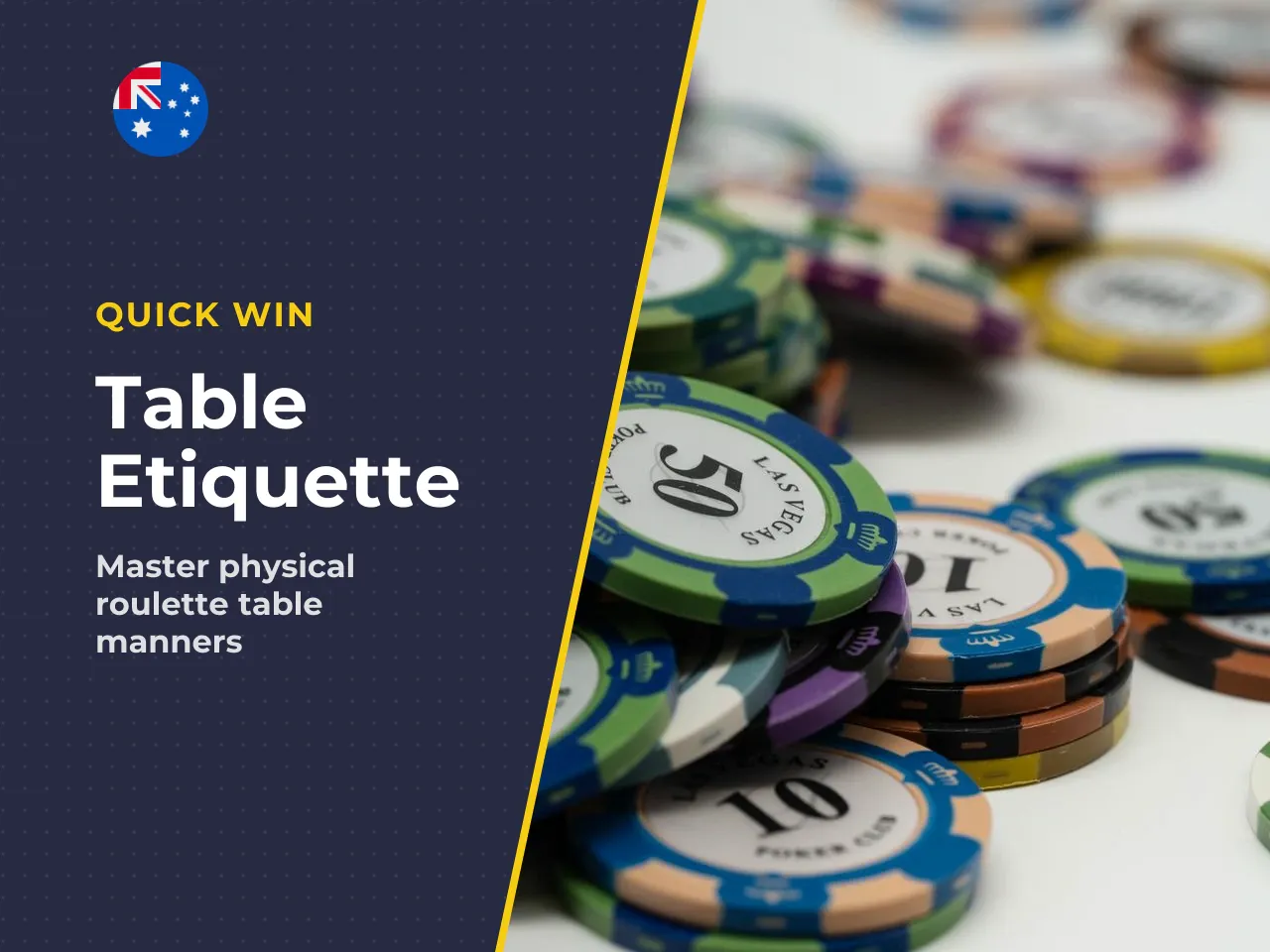
Buying colour chips. Roulette chips are not standard casino chips. They carry no printed denomination and are colour-coded per player so the dealer can tell whose bets are whose on a crowded layout. Some players call these quick win chips when they are marked at a low value for fast outside betting, but the term is informal. There is no special chip that improves your odds.

  • Wait for a pause between rounds. Do not reach across a live layout.
  • Place your cash or standard casino chips on the table, not into the dealer's hand, and state your buy-in.
  • Tell the dealer the value you want per chip (for example, "$50 in dollar chips" or "$500 in fives"). The dealer marks that value on the rim of the wheel with a marker chip.
  • Your colour chips are valid at that table only. Cash them back with the dealer before you leave, because the cage cannot value them.

Placing chips correctly. Chip position is the bet. A chip half on a line and half in a box will be interpreted by the dealer, and their interpretation is final. If you cannot reach a spot, hand the chips to the dealer and name the bet clearly ("twenty on seventeen straight up").

Other conventions worth knowing.

  • Stacking on the same spot as another player is fine. Colours keep it unambiguous.
  • Do not touch your winning chips until the dolly is removed.
  • Ask questions between spins, not mid-spin.
  • Tipping the dealer is customary in many jurisdictions; placing a bet "for the dealer" is a common way to do it.

Online, all of this is abstracted away: you click a chip value, click the layout, and the software enforces limits and timing. The trade-off is speed, and speed is where the risk lives, as the research below shows.

Land-Based Etiquette Colour Chips And Table

Every Roulette Bet: Payouts, Odds And Chip Placement

This is the reference table to bookmark. Note the deliberate distinction between the probability of the bet winning and the house edge, which two of the four leading competing guides confuse.

BetNumbers coveredPayoutWin chance (European, 37 pockets)Win chance (American, 38 pockets)Where the chip goes
Straight-Up135:12.70%2.63%Centre of the number's box
Split217:15.41%5.26%On the line between two adjacent numbers
Street311:18.11%7.89%Outer edge of a row of three
Corner (Quad)48:110.81%10.53%Intersection where four numbers meet
Basket (0-00-1-2-3)56:113.16%Corner of 0/00 and the 1-2-3 row (US only)
Line (Six Line)65:116.22%15.79%Junction of the outer edges of two rows
Column122:132.43%31.58%The "2 to 1" box at the foot of the column
Dozen122:132.43%31.58%"1st 12", "2nd 12" or "3rd 12" box
Red / Black181:148.65%47.37%The red or black diamond box
Even / Odd181:148.65%47.37%The "Even" or "Odd" box
High / Low181:148.65%47.37%The "1–18" or "19–36" box

How Quick Win Red Or Black Works

The simplest bet on the layout. You back all 18 red pockets or all 18 black pockets, the chip goes in the coloured diamond box, and it pays 1:1. Win $20 on a $20 stake, stake returned.

Why it is not a coin flip: the green zero belongs to neither colour. On a European wheel that leaves you 18 winning pockets out of 37, so 48.65%. On an American wheel, 18 out of 38, so 47.37%. That gap is the house edge, in plain sight.

One more thing. Red has no memory. Eight blacks in a row do not make red "due" on spin nine.

How Quick Win Odd Or Even Works

Structurally identical to red or black. You cover the 18 odd numbers or the 18 even numbers, at even money, resolved in one spin. Zero counts as neither odd nor even, which again is where the edge sits.

The only real difference between the two bets is cosmetic. Same coverage, same odds, same payout, same 2.70% expectation on a single-zero wheel. Players who prefer odd/even sometimes say it feels less superstitious than colour betting. That is preference, not maths.

Both bets qualify for La Partage and En Prison on French tables, which is genuinely useful. More on that shortly.

Inside Versus Outside Bets

  • Inside bets sit on the numbered grid: straight-up, split, street, corner, line. Low probability, high payout, high variance.
  • Outside bets sit on the perimeter: colours, odd/even, high/low, dozens, columns. Higher probability, smaller payout, lower variance.

Here is the part that surprises people: on a standard wheel, the house edge is identical across almost every bet type. A straight-up bet and a red/black bet on a European wheel both return −2.70% in expectation. What changes is the shape of the ride, not the destination.

The arithmetic, shown properly:

  • European straight-up: EV = (1/37 × 35) − (36/37 × 1) = −1/37 = −2.70%
  • American straight-up: EV = (1/38 × 35) − (37/38 × 1) = −2/38 = −5.26%
  • European red/black: EV = (18/37 × 1) − (19/37 × 1) = −1/37 = −2.70%

The one genuine outlier on the American wheel is the five-number basket bet at 7.89% house edge, the worst bet on the table. Avoid it.

Inside Versus Outside Bets. - Inside

European vs French vs American Roulette

FeatureEuropeanFrenchAmerican
Pockets37 (0, 1–36)37 (0, 1–36)38 (0, 00, 1–36)
Double zeroNoNoYes
House edge (most bets)2.70%2.70%5.26%
House edge (even-money bets)2.70%1.35% with La Partage/En Prison5.26%
RTP (most bets)97.30%97.30% (98.65% even-money)94.74%
Special rulesLa Partage, En Prison, call betsBasket bet (7.89% edge)
VerdictStrong defaultBest choice if availableAvoid where alternatives exist

Read that table as a ranking, not a menu. French first where the rule is offered, European as the sensible default, American only if nothing else is on the floor. Same game, three different prices.

Correction of a widely repeated error. Several casino blogs state that the single-zero version carries a house edge of 2.63%. That figure is wrong. 2.63% is the probability of a specific number landing on the American wheel (1/38). The European house edge is 1/37 = 2.7027%, rounded to 2.70%. If a source confuses these two numbers, treat its other arithmetic with caution.

How To Cut The House Edge To 1.35%: La Partage And En Prison

Both rules apply only to even-money bets (Red/Black, Even/Odd, High/Low) and only when zero lands.

1. La Partage ("the divide"). You have $50 on Red. Zero lands. Instead of losing the lot, the casino returns 50% of your stake, $25, and keeps the other $25. Your loss on a zero is halved, which halves the long-run edge on that bet from 2.70% to 1.35%.

2. En Prison ("in prison"). You have $50 on Red. Zero lands. The bet is frozen for one additional spin rather than settled.

  • Next spin lands Red → your original $50 is returned, with no winnings.
  • Next spin lands Black → the $50 is lost.
  • Next spin lands zero again → house rules vary; commonly the bet stays imprisoned for another spin, or is halved again.

The expected value of En Prison is effectively the same as La Partage, 1.35% on even-money bets. Which version you meet depends on the operator and the table, so check the rules panel before you sit down or click "play".

Practical takeaway for short sessions: if you are planning to bet even money for a small number of spins, a French table with La Partage gives you the mathematically best version of roulette that exists in mainstream casinos. That is a real, verifiable improvement, unlike any progression system.


How To Cut The House Edge

Roulette Strategies, Betting Systems And Budget Control

Betting systems fall into two families:

  • Progressive, where stake size changes with results (Martingale, Grand Martingale, D'Alembert, Fibonacci, Paroli).
  • Non-progressive or flat, where the stake stays constant, or is distributed across the layout in a fixed pattern (James Bond, flat outside betting).

Every one of them is a bankroll-shaping tool, not an edge-generating one. Read each of the six below with that framing.

Strategy 1: Martingale

Mechanic: double your stake after every loss; return to the base stake after any win. Applies to: even-money bets only (1:1).

Worked example, $5 base stake:

SpinStakeResultRunning balance
1$5Loss−$5
2$10Loss−$15
3$20Loss−$35
4$40Win +$40+$5

One win recovers every prior loss and returns exactly one base stake in profit. That is the appeal, and it is genuinely true, under two conditions that never hold in practice.

The two conditions. The commonly repeated claim that Martingale "guarantees you break even and recoup all losses as soon as you win one bet" is only valid with an infinite bankroll and no maximum table limit. Real tables have both constraints, and they are precisely what breaks the system.

The cost curve at $5 base:

Consecutive lossesNext required stakeCumulative outlay
3$40$75
5$160$315
7$640$1,275
8$1,280$2,555

Eight losses in a row on red is roughly a 1-in-160 event per sequence on a European wheel. Uncommon, but not rare across a few hundred spins. You are risking $2,555 to win $5. When the table maximum stops the progression, the loss is locked in and cannot be recovered by the system's own logic.

Strategy 2: Grand Martingale

Mechanic: double the losing stake and add one extra base unit each step. Recovers losses plus an accelerating profit, at a materially steeper cost curve.

Worked example, $5 base stake:

SpinStakeResultCumulative outlay
1$5Loss$5
2$15Loss$20
3$35Loss$55
4$75Loss$130
5$155Win +$155Net +$25

Higher reward per recovery, faster bankroll destruction. The table limit arrives roughly two steps earlier than with standard Martingale.

Strategy 3: D'Alembert

Mechanic: a gentler negative progression. Increase your stake by one unit after a loss; decrease by one unit after a win.

Worked example, $10 unit:

SpinStakeResultRunning balance
1$10Loss−$10
2$20Loss−$30
3$30Win$0
4$20Win+$20
5$10Loss+$10

Why players like it: stake growth is linear, not exponential, so a losing run is survivable on a modest bankroll. Why it still fails: the expected loss per spin remains 2.70% (or 5.26%) of turnover. Slower ruin is not profit.

Strategy 4: Paroli (Reverse Martingale)

Mechanic: a positive progression. Keep the base stake after a loss; double after a win; reset after three consecutive wins.

Worked example, $10 base:

SpinStakeResultCumulative profit
1$10Win+$10
2$20Win+$30
3$40Win+$70 → reset
4$10Loss+$60
5$10Loss+$50
6$10Win+$60

The logic: you risk small amounts of your own money and large amounts of the casino's. Downside is capped at the base stake; upside compounds during a hot run. The catch: three consecutive even-money wins occur about 11.4% of the time on a European wheel (0.4865³). Most cycles end before the payoff. This is the most bankroll-friendly system on the list, and it still returns −2.70%.

Strategy 5: Fibonacci

Mechanic: stake follows the sequence 1, 1, 2, 3, 5, 8, 13, 21… Move one step forward after a loss; move two steps back after a win.

Worked example, $10 unit:

SpinSequence positionStakeResultRunning balance
11$10Loss−$10
21$10Loss−$20
32$20Loss−$40
43$30Loss−$70
55$50Win−$20
62$20Win$0
71$10Win+$10

Gentler than Martingale, harsher than D'Alembert. Deep sequences still escalate quickly: eight steps in at a $10 unit means a $210 stake.

Strategy 6: James Bond

Type: non-progressive, flat, single-spin coverage of 25 of 37 numbers. Bankroll per spin: $200 (scale proportionally, so $20 or $2,000).

Chip distribution:

  1. $140 on High (19–36), pays 1:1 → net profit +$80 if it lands.
  2. $50 on the six-line 13-14-15-16-17-18, pays 5:1 → net profit +$100 if it lands.
  3. $10 on zero as insurance, pays 35:1 → net profit +$160 if it lands.

The dead zone: numbers 1 to 12. Land there and the full $200 is gone. That is 12/37 = 32.4% of spins on a European wheel.

The honest EV: (25/37 × average profit) − (12/37 × $200) works out to the same −2.70% of turnover. The system converts roulette into a game that wins about two-thirds of spins with a large occasional loss. Psychologically appealing, mathematically identical.

Strategy 6 James Bond. Type non-progressive

What Actually Constitutes Sound Budget Control

Since no system beats the edge, the only durable approach to casino roulette is exposure management:

  1. Set a session bankroll you are fully prepared to lose. Not "expect to win back". Lose.
  2. Cap your stake at 1–2% of that bankroll per spin. At $200, that is $2 to $4 per spin, giving you enough spins to actually enjoy the game.
  3. Set a stop-loss and a stop-win, in writing, before the first spin. A stop-win is the only mechanism that converts short-run variance into a realised quick win. Without it, the edge grinds it back.
  4. Cap session time, not just money. Set a clock. Roulette's event frequency is the variable that most reliably predicts how much money you turn over.
  5. Never increase stakes to chase. Chasing losses is the single most reliable behavioural marker of gambling harm.
  6. Prefer the lowest-edge table available. French with La Partage, then European. Avoid American wheels and side bets that raise the edge.
  7. Use only licensed casinos. Offshore or unlicensed services increase both your legal exposure and your risk of harm, and provide no meaningful dispute resolution if a withdrawal is refused.

Roulette betting limits are worth reading before your first spin, not after. Live tables publish a minimum and maximum per bet type, and the maximum on straight-up bets is usually far lower than on outside bets. That ceiling is exactly what stops a progression cold.

What Actually Constitutes Sound Budget Control

Important. Roulette is a game of random outcomes. Strategies and betting systems do not remove the house advantage and cannot guarantee quick win money. Play is for adults only, in jurisdictions where it is lawful. Check the operator's licence, your local rules and the responsible gambling tools available in your account. This information is general in nature and is not financial or legal advice. If you need support, contact the National Gambling Helpline: 1800 858 858.

Bonus Terms For Roulette: The Trap Most Players Miss

If your plan is to convert a welcome bonus into a fast roulette win, read this section twice. Roulette is the worst-treated game category in almost every bonus structure in the market, and the reason is structural: even-money bets are too easy to hedge.

What to check in the terms before you deposit, every time:

TermWhat it typically means for rouletteWhy it matters
Wagering requirementA turnover multiple (commonly 30x–50x of bonus, sometimes deposit + bonus)Determines total turnover before withdrawal is possible
Game contribution / weightingRoulette commonly counts 5–10%, and is frequently excluded entirelyAt 10%, a $1,000 wagering requirement means $10,000 of roulette turnover
Excluded variantsSpecific live or low-edge tables (often French/La Partage tables) may be barredPlaying an excluded game can void the bonus outright
Maximum bet while bonus is activeOften $5–$10 per spinExceeding it once can forfeit the entire bonus and winnings
Low-risk / hedge betting banCovering red and black, or 1st/2nd/3rd dozen simultaneously, or high and lowExplicitly prohibited by nearly every operator; a bannable offence
Maximum withdrawal from bonus fundsA cap (e.g. 5x bonus, or a flat AUD figure)Your "big win" may be contractually capped
Minimum depositA stated eligibility thresholdUnder-depositing forfeits eligibility
ExpiryCommonly 7–30 daysShort windows push higher-stakes play, a harm driver

The realistic conclusion: for roulette specifically, playing with your own funds under a clear stop-loss is usually a better proposition than playing through a bonus. Bonus funds carry turnover conditions that force far more exposure to the house edge than a short session ever would. If you do accept a roulette-eligible offer, treat the weighting percentage as the headline number, not the bonus size.

Licensing conditions from regulators such as the Malta Gaming Authority and Curaçao's licensing framework require operators to publish these terms and to provide responsible gambling tools, but the specific figures are always operator-set. Verify them on the operator's own terms page rather than in a review.

The realistic conclusion for roulette specifically

Live Roulette Formats: RNG, Live Dealers And Speed Variants

RNG Roulette Versus Live Dealer Roulette

  • RNG (virtual) roulette resolves outcomes via a certified random number generator. There is no physical wheel. Spins are near-instant, you play alone, and you set the pace, which means the pace can become very fast indeed.
  • Live dealer roulette streams a real wheel and a real croupier from a studio or casino floor. Outcomes come from physical mechanics. Rounds are slower because a human runs them, and other players share the table.

Neither format is "looser" than the other; the paytable and pocket count determine the edge. What differs is event frequency, meaning how many decisions per hour you are exposed to.

Live European Roulette is the most common table you will find in a live casino lobby: single zero, standard 35:1 straight-up, occasionally with racetrack call bets. Live American Roulette exists in the same lobbies and looks almost identical on screen. Check the wheel graphic for a double zero before you place a chip, because that one pocket nearly doubles the edge.

RNG Roulette Versus Live Dealer Roulette

Format Comparison

FormatLive dealerRound pacePayoutsDistinctive feature
Standard LiveYes~45–60 secStandard (35:1 straight-up)Full betting window, chat, social table
Auto RouletteNo (automated wheel)~25–30 secStandardReal wheel, no host; functional and fast
Speed RouletteYes~25 secStandardCompressed betting/settlement cycle; betting stays open during the spin
Instant RouletteYesContinuousStandardMultiple wheels running simultaneously; results-first, minimal waiting
Immersive RouletteYes~60 secStandardMulti-camera 4K presentation and slow-motion replays; rules unchanged
Lightning-style RouletteYes~30–40 secStraight-up reduced to 29:1, offset by random multipliers on up to 5 numbers, up to 500xMultiplier show format; overall RTP ≈ 97.30%, but straight-up-only RTP drops to ≈ 97.10%

Two things to internalise about the multiplier formats. First, the headline 500x figure is funded by cutting the base straight-up payout from 35:1 to 29:1. The multiplier is not free money. Second, the multiplier only applies to straight-up bets; outside bets receive no multiplier at all and are paid at standard odds while contributing to the same game.

On speed formats specifically: shortened rounds increase the number of decisions per hour by reducing the betting window and clearing results faster. That is the design intent, and it is the mechanism that turns a modest house edge into a large expected loss over a session. A 2.70% edge on $10 spins costs about $16 an hour at 60 spins per hour, and about $39 an hour at 145 spins per hour. Independent, peer-reviewed measurement of round durations across specific commercial speed formats remains limited; the figures above reflect operator-published round lengths and require further verification.

If you want to explore how these formats are presented in practice, our coverage of live roulette walks through the studio variants currently available to Australian players.

Two things to internalise about the

The Australian Online Gambling Landscape And The Place Of Roulette

Prevalence Of Gambling And The Rise Of Online Play

Australia has one of the most gambling-saturated consumer environments in the world. National survey work consistently finds that a large majority of Australian adults gamble at least occasionally, and that a substantial minority gamble regularly. For many Australian adults, gambling is a routine, ongoing part of life rather than an occasional pastime.

«More than 70% of regular online bettors scored at least one point on the PGSI, indicating risk of gambling-related harm.» — Australian Institute of Family Studies, National Gambling Trends Study (2023). https://aifs.gov.au/resources/short-articles/regular-online-bettors-australia

Online gambling has become a core component of this ecosystem rather than a niche activity. Smartphones, instant deposits and always-available live studios have removed nearly every friction point that once limited play to venue hours. For players comparing regulated options, our guide to the online casino market sets out what to look for before depositing.

The financial scale is significant. Aggregate estimates place Australian gambling losses at roughly $1,277 per adult per year, the highest per capita gambling losses recorded anywhere in the world.

«The total cost of gambling harm in Australia in 2021 was estimated at approximately $10.7 billion, including financial, health and social consequences.» — House of Representatives Standing Committee on Social Policy and Legal Affairs, You win some, you lose more (June 2023). https://www.aph.gov.au/Parliamentary_Business/Committees/House/Social_Policy_and_Legal_Affairs/OnlineGambling/Report

Online Gambling As A Public Health Issue

The framing of gambling has shifted decisively over the past decade from a consumer-choice issue to a public health one. The evidence on severity is unambiguous: people experiencing gambling problems are up to seven times more likely to attempt or consider suicide than those without such problems.

«One in three online gamblers experiences gambling harm, and online gamblers are twice as likely to experience negative consequences as venue-based gamblers.» — House of Representatives Standing Committee on Social Policy and Legal Affairs, You win some, you lose more (June 2023). https://www.aph.gov.au/Parliamentary_Business/Committees/House/Social_Policy_and_Legal_Affairs/OnlineGambling/Report

The doubling of harm risk in online environments is not an artefact of who gambles online. It reflects the properties of the channel: continuous availability, frictionless deposits, absent social cues, and, critically for roulette, very high event frequency.

The Place Of Roulette Within The Australian Gambling Product Mix

Within casino-style gambling, roulette occupies a distinctive position. It is the most played table game, and among table games it is the one most strongly associated with behavioural markers of harm.

«36% of online gamblers had bet on virtual roulette in the past 12 months; live roulette reached 29% of the audience over the same period.» — UK Gambling Commission, Online Casino Games Research (2023). https://www.gamblingcommission.gov.uk/statistics-and-research/publication/online-casino-games-research-2023

Behavioural account-level research reinforces the concern:

«Among table games, roulette is most closely associated with bonus page visits, in-session top-ups and declined deposits.» — Delfabbro et al., International Journal of Mental Health and Addiction (2023). https://link.springer.com/article/10.1007/s11469-023-01027-1

Those three markers, chasing bonuses mid-session, topping up an account while playing, and having a deposit declined, are among the clearest observable proxies for loss of control in account data.

Industry commentary also positions live roulette as the dominant live-casino product by table count, with commonly cited figures putting live roulette at roughly a third of all live dealer tables globally. These industry compilations are not peer-reviewed and rarely disclose methodology, so the specific proportion should be treated as indicative rather than established. What is well supported is the direction: roulette, and especially live roulette, is highly prominent, heavily marketed, and associated with elevated harm risk.

Those three markers, chasing bonuses mid-session

Structural Characteristics, Event Frequency And Harm

Why roulette specifically? The answer lies in game design rather than player psychology.

«Event frequency — the time between successive bet outcomes — is the most important structural characteristic for predicting the number of games played in a session.» — Delfabbro et al., International Journal of Mental Health and Addiction (2023). https://link.springer.com/article/10.1007/s11469-023-01027-1

This finding has a direct, practical consequence. The commercial trend in live roulette is towards shorter rounds, and Speed, Auto and Instant formats all compress the cycle. Each reduction in round length raises the number of exposures to the house edge per hour, and, per the research above, raises the number of games played per session. The edge percentage is unchanged; the total amount subjected to it grows.

For anyone chasing a quick win, this inverts the intuition. A faster game does not deliver a faster win. It delivers a faster resolution of the house edge against you.

Effectiveness Of Safer Gambling Messages In Online Roulette

Australian and international policy has leaned heavily on informational interventions: warning labels, prompts and reminders. Experimental evidence on their effect in roulette specifically is discouraging. In controlled trials, participants exposed to safer-gambling prompts spent similar amounts of time placing each bet, made similar numbers of spins, and played for comparable lengths of time overall.

«The "Take Time To Think" message had no reliable effect on the number of bets, speed of play or time spent on roulette in any experimental condition.» — Walasek et al., University of Warwick (2023). https://wrap.warwick.ac.uk/176685/

The implication is not that information is worthless. It is that passive messaging is not a substitute for structural controls. Binding deposit limits, session timers, mandatory breaks and self-exclusion have measurable effects on behaviour; a text prompt on a loading screen generally does not. If you are managing your own play, build the limit into the account, not into your intentions.

Enforcement Against Illegal Offshore Casino-Style Services

General information only, not legal advice. The licensing status of any individual casino must be verified independently through official ACMA resources and the relevant state or territory regulator.

Under the Interactive Gambling Act 2001 (IGA), it is unlawful to provide online casino-style gambling, including roulette, blackjack, poker and slots, to customers in Australia. The prohibition targets operators, not players, but the practical consequence for players is that offshore sites operating in breach of the IGA sit outside Australian consumer protection entirely.

The Australian Communications and Media Authority (ACMA) actively enforces the regime. In a single quarterly reporting period, ACMA examined 612 enquiries and complaints, completed nine investigations covering twelve gambling sites, and identified thirteen breaches of the IGA.

Under the Interactive Gambling Act 2001

«Between July and September 2023, ACMA blocked 49 websites, most of which offered casino games — roulette, poker, blackjack and slots — without an Australian licence.» — ACMA, Interactive Gambling Enforcement Report, July–September 2023. https://www.acma.gov.au/publications/2023-11/report/interactive-gambling-enforcement-report-july-september-2023

Practical takeaway: site blocking means access can disappear overnight, and with it any balance held on the account. There is no Australian avenue of recourse against an operator that is unlawful here in the first place.

Government Response To The Online Gambling Inquiry

The 2023 parliamentary inquiry into online gambling triggered a substantial policy response, particularly around advertising. The scale of harm quantified in that process is worth stating plainly.

«The total cost of wagering harm in Australia in 2023 was $26.8 billion: $4.9 billion in psychological harm, $8.2 billion in health harm and $5.6 billion in relationship damage.» — Office of Impact Analysis, Wagering Advertising Reform Impact Analysis (2026). https://oia.pmc.gov.au/published-impact-analyses/wagering-advertising-reform

Reform work has concentrated on advertising restrictions, a national self-exclusion register (BetStop), mandatory customer verification, and tighter rules around inducements. Casino-style products including roulette remain prohibited for provision to Australians under the IGA, which is why the online roulette market accessible from Australia is largely offshore, and largely outside these protections.

Free Play Versus Real-Money Roulette

Demo mode is genuinely useful for four things:

  1. Learning the layout and where chips physically go for each bet.
  2. Rehearsing the round rhythm and the "no more bets" cut-off.
  3. Observing how a progression behaves over 50–100 spins without paying for the lesson.
  4. Confirming a table's rules panel: pocket count, La Partage availability, limits.

Demo mode is misleading in three ways:

  1. No financial consequence means no emotional calibration. The behaviour that costs money is the behaviour that emerges under real loss.
  2. No bankroll constraint makes Martingale look robust. A demo balance that resets makes an unrecoverable losing run feel survivable.
  3. Session length is unmeasured, so you learn nothing about your own time-on-device patterns.

Population-level data suggests harm patterns also differ across demographics: women show lower measured risk levels of gambling-related harm than men on standard screening instruments, yet report higher levels of serious mental illness and lower wellbeing. This pattern is drawn from Australian survey work and warrants direct verification against the current AIFS dataset before being relied on for any specific claim. The broader point stands: screening scores alone do not capture the full distribution of harm.

Recommendation: use free online games to learn mechanics, then move to real money roulette at the minimum table stake with a hard stop-loss. The gap between demo confidence and real-money discipline is where most losses originate.

Free Play Versus Real-Money Roulette. Demo

Getting Paid: Withdrawals, Payment Methods And KYC In Australia

Locking in a short win is only half the exercise. The other half is getting the money out, which is where speed claims meet verification reality.

MethodTypical deposit speedTypical withdrawal speedNotes
PayID / instant bank transferNear-instant1–3 business days after approvalWidely used in Australia; bank-side blocks on gambling merchants are common
Bank transfer (EFT)1–2 business days2–5 business daysSlowest, but well documented for record-keeping
Cryptocurrency (BTC, ETH, USDT)MinutesOften within 1–24 hours after approvalFastest rail in practice; exposes you to price volatility and network fees
E-walletsNear-instant24–48 hoursAvailability for Australian accounts varies by operator
Credit / debit cardsInstantOften not supported for withdrawalsAustralian consumer credit cannot lawfully be used for online gambling
Prepaid vouchersInstantNot supportedDeposit-only by design

Two things that determine your actual withdrawal time far more than the method:

  1. The operator's internal approval queue, commonly 24–72 hours, and sometimes reset by a "pending" period during which a withdrawal can be reversed back into your balance.
  2. KYC verification, which is almost always triggered by your first withdrawal, not your first deposit.

KYC Checklist: Do This Before You Request A Payout

  • Photo ID, meaning a passport, Australian driver licence or proof-of-age card. Full document, all four corners visible, unexpired.
  • Proof of address, a utility bill or bank statement dated within the last 3 months, showing your name and address matching your account exactly.
  • Proof of payment method, a card photo with middle digits obscured, or a bank statement header showing the account name.
  • Source of funds, requested for larger withdrawals; payslips or bank statements.
  • Name matching, because the account name, ID and payment method must all match. Third-party payments are refused universally and are a leading cause of confiscated balances.

Pre-withdrawal checklist:

  • Wagering requirement fully cleared (check the bonus tracker, not your assumption).
  • No bonus active that would be voided by withdrawing.
  • Maximum-bet rule was never breached during bonus play.
  • KYC submitted and approved before you need the money.
  • Withdrawal amount sits within the method's min/max and any bonus cap.
  • Screenshot your balance and the terms as they stood at deposit time.
KYC Checklist Do This Before You

Safety Checklist: Vetting A Casino Before You Deposit

  • Licence stated and verifiable, with a licence number present and confirmed on the regulator's own register, not just displayed in the footer.
  • ACMA status checked, confirming the service is not on the current blocked-site list.
  • Game providers named, meaning recognised studios and RNG suppliers, with independent testing certification (eCOGRA, iTech Labs, GLI).
  • Roulette rules disclosed per table: pocket count, La Partage/En Prison, and published RTP.
  • Terms accessible before registration, with wagering, weighting, max bet and withdrawal caps stated in plain language.
  • Responsible gambling tools live in the account: deposit limits, loss limits, session timers, time-out and self-exclusion, all self-service.
  • Withdrawal limits and fees published, including any monthly cap.
  • Real support channel, live chat or email that answers a test question before you deposit.
  • Complaints history searchable and not dominated by withdrawal refusals.
Safety Checklist Vetting A Casino Before

Responsible Gambling: Tools That Actually Work

Regulatory frameworks require licensed operators to provide binding controls, and the evidence says these, not warning messages, are what change behaviour. Australian codes of practice for online wagering providers require deposit limits, loss limits, session time limits and time-out/self-exclusion facilities.

Set these before your first spin, not after your first loss:

  • Deposit limit, daily, weekly or monthly, set at an amount that would not affect your household budget.
  • Loss limit, a harder control than a deposit limit, because it accounts for recycled winnings.
  • Session timer, the control that most directly counters roulette's event frequency.
  • Reality checks, periodic pop-ups showing elapsed time and net position.
  • Time-out, a short cooling-off period of 24 hours to 6 weeks.
  • Self-exclusion / BetStop, Australia's national register, which blocks registered wagering operators. Exclusion cannot be reversed on impulse, which is precisely the point.

Behavioural markers to take seriously in yourself or someone else: chasing losses with larger stakes; gambling to escape stress rather than for enjoyment; concealing time or money spent; borrowing to gamble; declined deposits followed by immediate re-attempts; sleep and work disruption.

Australian research identifies practical controls used successfully by gamblers: setting a budget in advance, pre-committing to a time limit, and refusing to chase losses. The WHO's ICD-11 defines gambling disorder by loss of control and continuing despite harm, which is why external, binding limits outperform internal resolve. Mindfulness-based interventions have also been examined in peer-reviewed gambling research as a means of reducing urge-driven play and improving emotional regulation.

Responsible Gambling Tools That Actually Work

Support in Australia: Gambling Help Online, 1800 858 858, 24 hours a day, 7 days a week, free and confidential. Online chat and counselling are also available. BetStop, the National Self-Exclusion Register, allows you to exclude yourself from all licensed Australian online wagering providers.

If you decide to play, compare two or three brands on licence, terms and payout rules first, then set your limits, then choose the lowest-edge table available. In that order. No rush.

FAQ: Roulette Quick Win Questions Australian Players Ask

Is there a roulette strategy that guarantees a quick win?

No. Every betting system redistributes risk across spins without changing the expected value of any single spin. On a European wheel, the expected return is −2.70% of turnover regardless of the staking pattern. Short winning sessions happen because of variance, and the only way to keep one is a pre-set stop-win you actually honour.

Which roulette version gives me the best chance?

French roulette with La Partage or En Prison, at 1.35% house edge on even-money bets. Then European roulette at 2.70%. Avoid American roulette at 5.26%, and avoid the American five-number basket bet at 7.89%.

Is red or black the better bet?

Neither. Both cover 18 numbers and both win 48.65% of the time on a European wheel. Past results have no influence on the next spin, and believing otherwise is the gambler's fallacy.

Is odd or even different from red or black?

Only in name. Both are outside bets covering 18 numbers at even money, with the same 48.65% win chance on a single-zero wheel. Choose whichever you find easier to track.

Can I use the Martingale system at an online casino?

Mechanically, yes on most tables. Practically, table maximums and your own bankroll cap the progression, and the claim that "one win recovers everything" only holds with unlimited funds and no bet ceiling. If you are playing with a bonus active, doubling stakes will also breach max-bet rules and can void the bonus and any winnings.

Does roulette count towards bonus wagering requirements?

Usually only partially, commonly 5% to 10%, and it is frequently excluded outright. Specific low-edge tables, including French and La Partage variants, are often barred. Covering red and black simultaneously to clear wagering is prohibited by virtually every operator and can void the account.

Why is the house edge 2.70% and not 2.63%?

2.70% is 1/37, the European house edge. 2.63% is 1/38, the probability of a single number landing on the American wheel. These two figures are frequently confused in casino blogs; if you see 2.63% presented as the European house edge, the source has made an arithmetic error.

Is live roulette fairer than RNG roulette?

Neither is inherently fairer. Live dealer roulette uses physical mechanics; RNG roulette uses certified random number generation. The edge is determined by pocket count and paytable, not the delivery method. RNG games are typically faster, which increases total exposure per hour.

Does Lightning Roulette give better value because of the multipliers?

No. The 500x multipliers are funded by cutting the straight-up payout from 35:1 to 29:1. Overall RTP lands near 97.30%, in line with standard European roulette, and outside bets receive no multiplier at all.

How fast can I withdraw a roulette win in Australia?

Crypto is typically fastest, often 1 to 24 hours after internal approval. PayID and bank transfers usually take 1 to 5 business days. The dominant delay is almost always KYC verification and the operator's approval queue, not the payment rail. Complete verification before you need the money.

Is online roulette legal in Australia?

Under the Interactive Gambling Act 2001, it is unlawful to provide online casino-style gambling, including roulette, to Australian customers. The prohibition targets operators. ACMA actively blocks non-compliant sites, which means access, and any balance held, can vanish without warning. Verify status independently and seek your own legal advice.

What are the odds of losing eight even-money bets in a row?

On a European wheel, roughly 1 in 160 per eight-spin sequence (0.5135⁸). Across a long session that is a routine occurrence, and it is the exact event that terminates a Martingale progression.

Appendix A: Fact-Check Corrections To Commonly Published Claims

Published claimStatusCorrection
"The house edge on the single-zero version is set at 2.63%."IncorrectThe European house edge is 1/37 = 2.7027%, i.e. 2.70%. The 2.63% figure is 1/38, the chance of a specific number on the American wheel.
"Betting red or black covers 18/38 combinations."Context-dependent18/38 (47.37%) applies to American roulette only. On European and French wheels it is 18/37 = 48.65%.
Martingale "guarantees you will break even and recoup all losses as soon as you win just one bet."Requires qualificationTrue only with an infinite bankroll and no maximum table limit. Real table ceilings and finite bankrolls invalidate the guarantee.
En Prison "lowers the house edge down to 1.35%."Correct, with scopeAccurate, but only for even-money bets, and only when the rule is offered at that table. It does not apply to inside bets.
"The house edge is due to the green zero (and double zero in American roulette)."CorrectThe zero pockets are not covered by even-money or colour bets, which is the mechanical source of the edge.
Live roulette accounts for "approximately 35% of all live dealer tables globally."UnverifiedSourced from non-peer-reviewed industry compilations without disclosed methodology. Direction of the claim is well supported; the specific proportion is not.