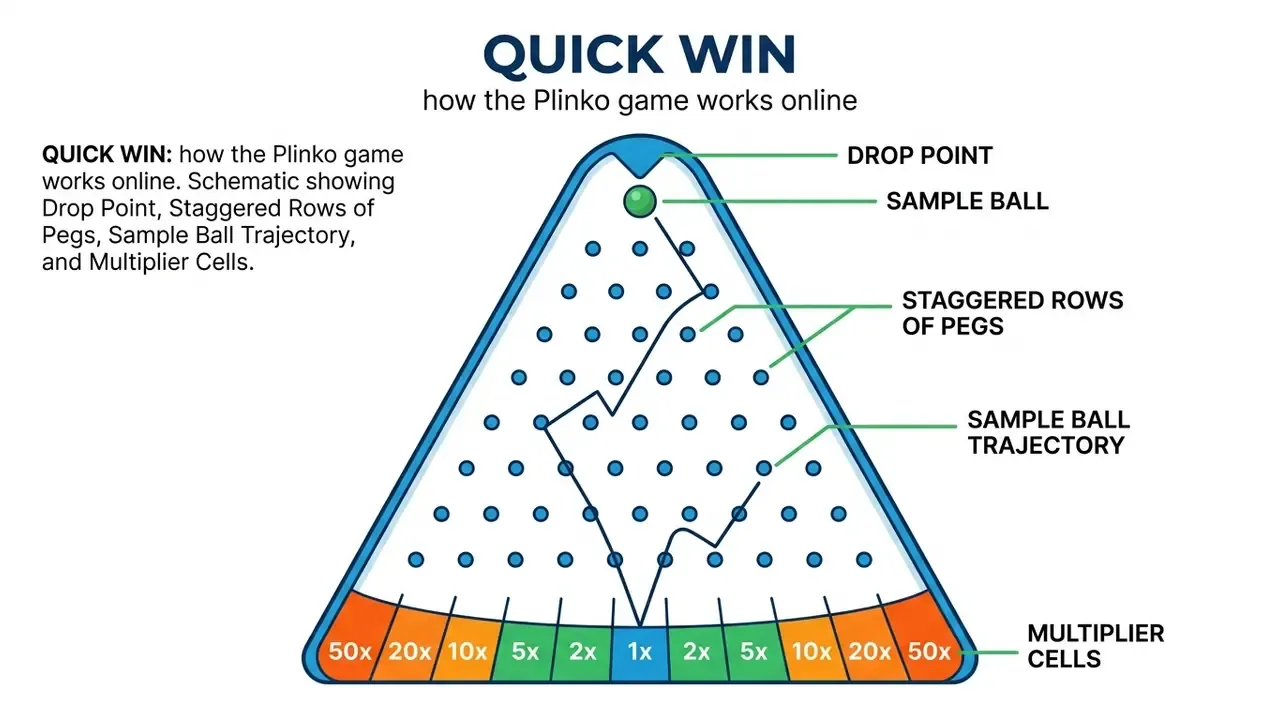
This guide analyses the online game Plinko as a product category rather than as a single title. It examines the game's origin in television entertainment, its board geometry (drop point, peg rows, multiplier cells), the round sequence from bet placement to ball landing, the differences between demo and real-money modes, mobile delivery, published RTP figures across major suppliers, and the Australian regulatory context.
Three types of evidence were used: supplier documentation and published game specifications (Spribe, BGaming, Stake, Hacksaw); independent laboratory and simulation reports on Plinko's return and volatility; and Australian regulatory and population-survey material from the Australian Communications and Media Authority (ACMA), the Australian National University (ANU) and the NSW Responsible Gambling Fund. Where a claim could not be verified against a primary source, it is flagged in the text as unverified rather than presented as fact.
A note on transparency. Several widely circulated claims about Plinko "patterns", "hot boards" and "winning systems" could not be substantiated in any supplier document, laboratory report or peer-reviewed study consulted for this article. They are treated below as marketing language, not as findings. That distinction matters more than it sounds: most of the pressure to deposit in this category arrives dressed as analysis.